https://youtu.be/u0mkxenEX3A
Saturday, September 18, 2021

The story of Isaac Newton discovering the laws of gravity by watching apples falling from a tree is probably just a myth. He did do his work on gravity while at a farm, but that is about as much as can be proven.


Return to the StarChild Main Page
Go to Imagine the Universe! (A site for ages 14 and up.)

The StarChild site is a service of the High Energy Astrophysics Science Archive Research Center (HEASARC), Dr. Alan Smale (Director), within the Astrophysics Science Division (ASD) at NASA/ GSFC.
StarChild Authors: The StarChild Team
StarChild Graphics & Music: Acknowledgments
StarChild Project Leader: Dr. Laura A. Whitlock
Curator: J.D. Myers
Responsible NASA Official: Phil Newman
Privacy Policy and Important No
Energy and Performance
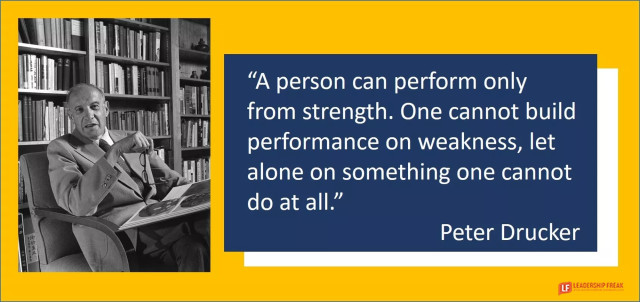
A 5 STEP PROJECT THAT FUELS ENERGY AND PERFORMANCE Results are build on strengths, not weaknesses. List the top three strengths of each direct report. What are they doing when they’re at their best? What are they doing when their energy goes up? More: http://bit.ly/361qSWH


Nataraja Pathu - Tamil hymns on Nataraja with English translation - Srid...
https://youtu.be/9zSwsa8KTRM
Nataraja Pathu - Tamil hymns on Nataraja with English translation - Sridevi Nrithyalaya
Sridevi Nrithyalaya
This hymn is a dialogue that the devotee engages in with the Lord. Where all is fair in this inexplicable relationship of the Lord and the devotee, the latter sometimes cries, sometimes chides, at times introspects and at other times, even commands, seeking answers to the questionable transciences and striving to become one with the Lord who is ever in Trance.
In the first stanza, the devotee addresses Nataraja as the omniscient one and intellectually internalises His formless omnipresence. The second stanza is an interesting contradiction as well as a reiteration to the first, where the devotee describes His form and His dance, and also affirms that the movement of the Universe, is but His dance. In the third stanza, the devotee begins the inward journey, introspecting and questioning the Lord about the ephemeral happenings in the world. The next stanza is proof of the devotee's progress in the journey, for it is a clear account of all that s/he doesn't desire or seek. The following fifth stanza witnesses a devotee who takes liberty to mock the Lord of His indifference. In the sixth stanza, the devotee goes one step closer to the Lord and holds Him responsible for all the misdeeds of the former. In the process of this journey, the following stanza sees maturity in the devotee who seems to have realised the pain of the endless cycle of births and deaths. To be relieved of the incessant circle of life, in the eighth stanza, the devotee pleads the Lord to forgive her/him for all the wrong doings, however grave or silly it may be. The ninth stanza is the voice of a devotee who gradually gathers strength and develops a detachment towards relationships, wealth, fame and power. The Lord chooses the devotee and He alone lays down the path for the devotee unto Him. In that very path, there could be phases of introspection, doubtfulness, realisation, conviction and certainly, hopelessness. The last stanza is an open cry to the Lord from a devotee who feels hopeless, helpless and cheated by the Lord's indifference. Having known that He is the one who pervades the Universe as the five elements, the devotee now truly realises and experiences His omnipresence, which is metaphorically depicted as the five forms of the Lord (in His Panchabhootha Kshetras) as Ekambreshwara (Earth), Jambukeshwara (Water), Arunchaleswara (Fire), Srikālahasthiswara (Wind) and Nataraja (Ether). Now, what other way does the devotee have, but to surrender? It is when the devotee completely surrenders, that the Lord appears.
We have interpreted this hymn as an inward journey of the Self: a journey unto Him
This hymn is a dialogue that the devotee engages in with the Lord. Where all is fair in this inexplicable relationship of the Lord and the devotee, the latter sometimes cries, sometimes chides, at times introspects and at other times, even commands, seeking answers to the questionable transciences and striving to become one with the Lord who is ever in Trance. In the first stanza, the devotee addresses Nataraja as the omniscient one and intellectually internalises His formless omnipresence. The second stanza is an interesting contradiction as well as a reiteration to the first, where the devotee describes His form and His dance, and also affirms that the movement of the Universe, is but His dance. In the third stanza, the devotee begins the inward journey, introspecting and questioning the Lord about the ephemeral happenings in the world. The next stanza is proof of the devotee's progress in the journey, for it is a clear account of all that s/he doesn't desire or seek. The following fifth stanza witnesses a devotee who takes liberty to mock the Lord of His indifference. In the sixth stanza, the devotee goes one step closer to the Lord and holds Him responsible for all the misdeeds of the former. In the process of this journey, the following stanza sees maturity in the devotee who seems to have realised the pain of the endless cycle of births and deaths. To be relieved of the incessant circle of life, in the eighth stanza, the devotee pleads the Lord to forgive her/him for all the wrong doings, however grave or silly it may be. The ninth stanza is the voice of a devotee who gradually gathers strength and develops a detachment towards relationships, wealth, fame and power. The Lord chooses the devotee and He alone lays down the path for the devotee unto Him. In that very path, there could be phases of introspection, doubtfulness, realisation, conviction and certainly, hopelessness. The last stanza is an open cry to the Lord from a devotee who feels hopeless, helpless and cheated by the Lord's indifference. Having known that He is the one who pervades the Universe as the five elements, the devotee now truly realises and experiences His omnipresence, which is metaphorically depicted as the five forms of the Lord (in His Panchabhootha Kshetras) as Ekambreshwara (Earth), Jambukeshwara (Water), Arunchaleswara (Fire), Srikālahasthiswara (Wind) and Nataraja (Ether). Now, what other way does the devotee have, but to surrender? It is when the devotee completely surrenders, that the Lord appears. We have interpreted this hymn as an inward journey of the Self: a journey unto Him. Dancers: Sanjena Ramesh Rajadarshini Saravanan Kameshweri Ganesan Mridula Sivakumar Mrinalini Sivakumar Bhairavi Venkatesan Harinie Jeevitha Nishkala Ranjeev Vishwashree Sai Smriti Suresh Meghna Unnikrishnan Lakshita Madhan Krithika Krishna Kamaladevi Nattuvangam - Dr. Sheela unnikrishnan Music & Vocal - Sri Srikanth Gopalakrishnan Mridangam - Dr. Guru Bharadwaaj Veenai - Kumari Anjani Srinivas Lights - Sri Murugan, Kumar Stage Videography - Dop Sri Lakshmananjai Assistants - Sri Kaadhar & Kumari Karishma Music recorded @ Aarabhi Studios Special thanks to
Madeleine Peyroux Best Songs - Madeleine Peyroux Greatest Hits Full Album
https://youtu.be/vk2_ocJlvjU
HUMAN's Musics - A film by Yann Arthus-Bertrand / Composed by Armand Amar
HUMAN's Musics - A film by Yann Arthus-Bertrand / Composed by Armand Amar
HUMAN's Musics - A film by Yann Arthus-Bertrand / Composed by Armand Amar
The idea with HUMAN was to create songs that would reflect the same emotion generated by the interviews. I wanted things to open up, to open up one’s heart, to let the sadness be without any restraint. HUMAN has been one of these rare moments in my life as a film composer during which I could express all these different cultures at the same time : either working on minimalist songs or meeting with these singers and musicians coming from all around the world. Which note did I first produce ? I had more like a global vision in mind, an atmosphere that would merge into the film and that would bring people together, this was my starting point. The part I created for the Mongolian sequence might be the best summary of the atmosphere I wanted the film to have. Yann has given me a particular role as a film composer that is very diffrent from the one other directors usually give me. There is a strong friendship between us, an intimate relationship. He’s generous. You follow him because of his fantastic instinct, I can advise on the artistic process being in a way the first audience." Armand Amard, composer of the HUMAN music.Monday, September 13, 2021
While on Twitter Be CIVIL


I made also made a pic, of 's #TwitterSpaces rules! I called it #TwitterSpacesEtiquette #13Rules to follow. Is there another rule that I need to add? Comment below so I can edit it. 
Sunday, September 12, 2021
Subscribe to:
Posts (Atom)